
CTT GAS5 · 20FT and 40FT multi-gas platform

Product family overview

5-in-1 Cryogenic ISO Tank Container

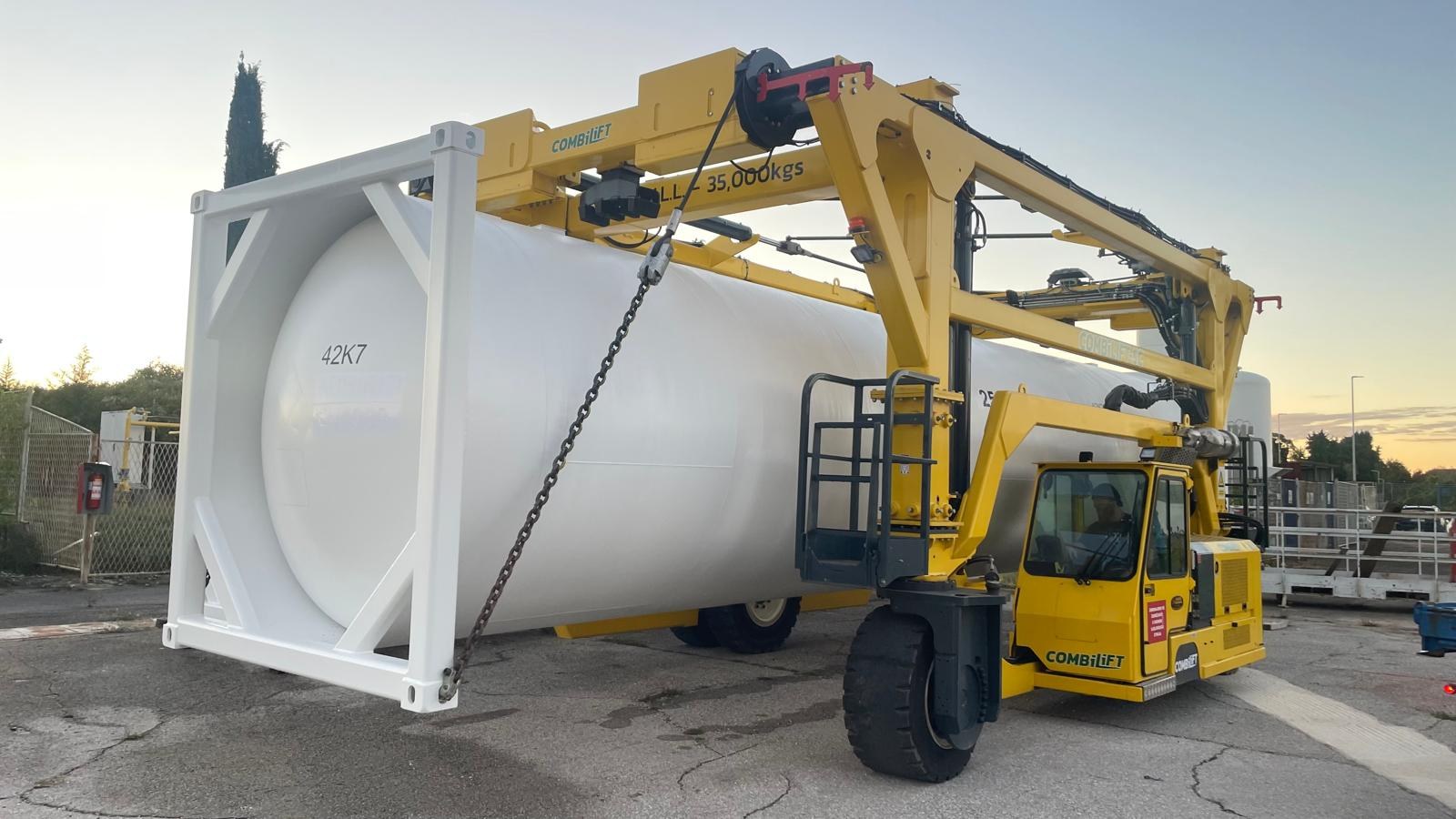
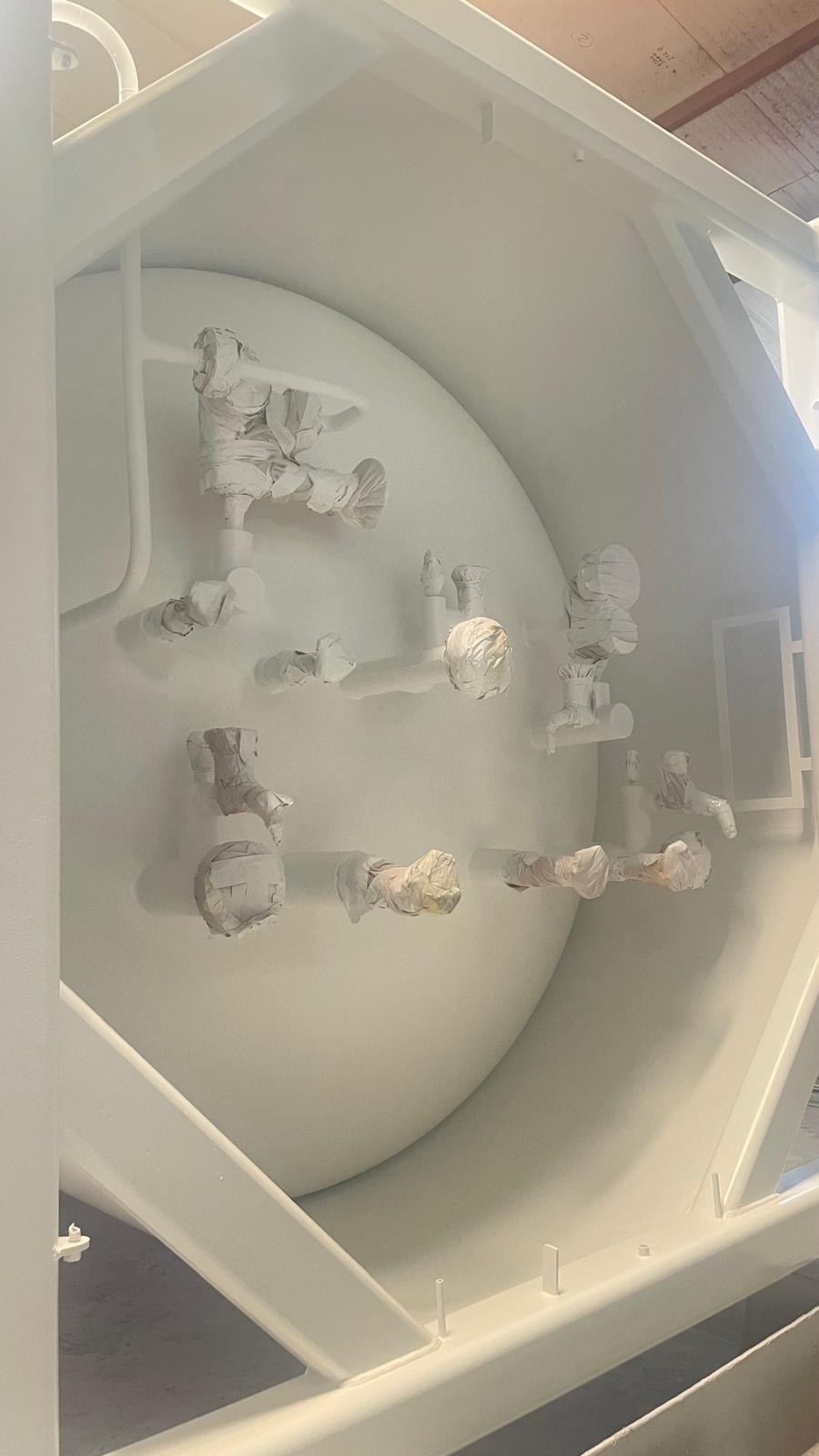
CTT GAS5 is a 5-in-1 cryogenic ISO tank container available in 20FT and 40FT versions. Each version is designed for multimodal road, rail and sea transport and can also be used as a stationary cryogenic storage tank. One approved design combines capability for liquid oxygen, liquid nitrogen, liquid argon, LNG / liquid methane and liquid ethylene. For each operation, the valve configuration is set for the selected medium, with the designated valves opened for loading or unloading and all non-required flow paths kept isolated.

Operators can redeploy container capacity as customer demand changes, consolidate spare equipment and reduce dependence on separate single-medium fleets. Approved service and safety procedures apply whenever the carried medium is changed.

Available formats
20FT · 40FT
40FT vessel capacity
36.49 m³
Service scope
5 media · 3 safety families
Product designation
CTT GAS5

Available configurations

Technical configuration overview.

Prepare an RFQ
01

Five industrial cryogenic media

Multipurpose Cryogenic ISO Tank Container for Liquid Oxygen, Nitrogen, Argon, Methane and Ethylene – 40FT

36.49 m³ · CTT GAS5 · Concept 3
Available for production upon order
Multipurpose Cryogenic ISO Tank Container for Liquid Oxygen, Nitrogen, Argon, Methane and Ethylene – 40FT manufactured by CTT-CRYO TRANS TECH

A 40FT platform for multimodal transport of five approved cryogenic media and use as a stationary storage tank, with payload determined by the selected medium.

Vessel capacity
36.49 m³
Dimensions
12,192 × 2,438 × 2,591 mm
Maximum gross mass
30,480 kg
Empty container mass
10,800 kg
Published payload · Liquid methane
14,650 kg
Published payload · LNG
15,000 kg
Published payload · Liquid oxygen
18,616 kg
Published payload · Liquid nitrogen / argon
18,616 kg
Working pressure
0.6 MPa
Design / test pressure
0.76 / 0.91 MPa
Design temperature
−196°C to +50°C
Inner / outer vessel
AISI 304
Published design codes
RID 2025 · EN 13530-2 · ASME VIII Div. 1
02

Five industrial cryogenic media

Multipurpose Cryogenic ISO Tank Container for Liquid Oxygen, Nitrogen, Argon, Methane and Ethylene – 20FT

15 m³ · CTT GAS5 · Concept 4
Available for production upon order
Multipurpose Cryogenic ISO Tank Container for Liquid Oxygen, Nitrogen, Argon, Methane and Ethylene – 20FT manufactured by CTT-CRYO TRANS TECH

A compact 20FT platform for multimodal transport of five approved cryogenic media and use as a stationary storage tank.

Nominal capacity
15 m³
Container format
20FT ISO
Intended media
Methane · Oxygen · Nitrogen · Argon · Ethylene
Final technical data
Confirmed for the ordered medium and configuration

Cryogenic gas safety

Three gas groups. Three distinct safety profiles.

The five approved cryogenic media are classified into three safety groups according to their behavior in service: inert, oxidizing and flammable.

01 · INERT CRYOGENIC GASES

Liquid nitrogen and argon

LIN · LAR

Nitrogen and argon are non-flammable and chemically inert under normal handling conditions. Their primary atmospheric hazard is oxygen displacement, particularly in enclosed or poorly ventilated areas; direct contact with the liquid or uninsulated equipment can also cause severe cold burns.

Primary safety focus

Verify ventilation, oxygen-deficiency monitoring where required, cryogenic PPE, pressure-relief protection and procedures that prevent liquid from being trapped between closed valves.

02 · OXIDIZING CRYOGENIC GAS

Liquid oxygen

LOX

Liquid oxygen is not a fuel, but it strongly accelerates combustion. Oxygen enrichment can cause materials to ignite more easily and burn more rapidly and intensely than they do in normal air.

Primary safety focus

Verify oxygen-compatible materials and oxygen-clean wetted surfaces. Oil, grease, organic residue and incompatible materials must be excluded, and ignition sources controlled during transfer and maintenance. LOX and LNG / liquid methane must never be loaded in direct consecutive service in the same tank; follow the approved service-sequencing and preparation procedure.

03 · FLAMMABLE CRYOGENIC GASES

LNG / methane and ethylene

LNG / liquid methane · Liquid ethylene

Methane and ethylene can form flammable mixtures with air. A cryogenic release may create a cold vapor cloud that remains close to the ground until it warms and disperses, while high concentrations can also displace oxygen.

Primary safety focus

Verify ventilation and gas detection, ignition-source control, suitable hazardous-area electrical equipment, bonding and grounding during transfer, and emergency isolation and pressure-relief arrangements. LNG / liquid methane and LOX must never be loaded in direct consecutive service in the same tank; follow the approved service-sequencing and preparation procedure.

Medium-specific reference data

Five approved cryogenic media key properties

LOX · UN1073

Cryogenic ISO Tank Container for Liquid Oxygen

Typical liquid cargo temperature: −183°C · 1,141 kg/m³

Liquid oxygen is typically carried at approximately −183°C, with the exact cargo temperature set by the operating pressure and loading condition. At this temperature, its density is about 1,141 kg/m³ and one litre represents roughly 799 litres of oxygen gas at 0°C and 1.013 bar—supporting efficient delivery of large oxygen volumes.

Operating profile

Major users include steel and non-ferrous metallurgy, glass production, chemical processing, water treatment and medical-gas supply. GAS5 allows approved fleet capacity to be assigned to these high-volume LOX markets in either 20FT or 40FT format, using the defined oxygen-service procedure.

LIN · UN1977

Cryogenic ISO Tank Container for Liquid Nitrogen

Typical liquid cargo temperature: −196°C · 806 kg/m³

Liquid nitrogen is typically carried at approximately −196°C, with the exact cargo temperature set by the operating pressure and loading condition. Its liquid density is about 806 kg/m³, and one litre represents roughly 645 litres of nitrogen gas at 0°C and 1.013 bar—combining compact transport with strong cooling and inerting capability.

Operating profile

Food freezing and chilling, chemical inerting and purging, electronics and semiconductor production, pharmaceuticals, laboratories and metal processing are major demand sectors. GAS5 gives operators a practical way to allocate approved capacity to seasonal food demand, maintenance shutdowns or project-based cooling without a separate tank design.

LAR · UN1951

Cryogenic ISO Tank Container for Liquid Argon

Typical liquid cargo temperature: −186°C · 1,395 kg/m³

Liquid argon is typically carried at approximately −186°C, with the exact cargo temperature set by the operating pressure and loading condition. Its density of about 1,395 kg/m³ is the highest of the five media by mass per unit of liquid volume, while one litre represents roughly 782 litres of argon gas at 0°C and 1.013 bar.

Operating profile

Welding and metal fabrication, steel and stainless-steel production, additive manufacturing, electronics and specialty processing are principal markets. On the GAS5 platform, approved capacity can be balanced between argon and nitrogen demand, improving utilization across industrial-gas distribution routes.

LNG / Methane · UN1972

Cryogenic ISO Tank Container for LNG / Liquid Methane

Typical LNG cargo temperature: −162°C · 600× volume reduction

LNG is typically carried at approximately −162°C, reducing natural-gas volume by about 600 times and enabling efficient ISO-container transport beyond pipeline networks. Because commercial LNG is a composition-dependent mixture, its exact cargo temperature and density are defined by the product specification, operating pressure and loading condition.

Operating profile

Power generation, industrial heat, peak-demand supply, off-grid energy projects and marine or heavy-duty transport are core LNG markets. GAS5 adds the option to position 20FT or 40FT capacity for LNG contracts while keeping the asset within a broader approved cryogenic fleet plan.

Ethylene · UN1038

Cryogenic ISO Tank Container for Liquid Ethylene

Typical liquid cargo temperature: −104°C · 568 kg/m³

Liquid ethylene is typically carried at approximately −104°C, with the exact cargo temperature set by the operating pressure and loading condition. Its liquid density is about 568 kg/m³, and one litre represents roughly 450 litres of ethylene gas at 0°C and 1.013 bar—supporting efficient bulk movement of this major petrochemical feedstock.

Operating profile

Petrochemical producers use ethylene primarily for polyethylene, ethylene oxide and ethylene glycol, ethylbenzene and vinyl-chloride production chains. Ethylene capability extends the GAS5 fleet into specialized chemical logistics and lets approved capacity serve project or contract demand without introducing a separate tank architecture.

Applications

Where this product family can be used.

01

Flexible fleet planning

Assign the same approved 20FT or 40FT GAS5 tank to LOX, LIN, LAR, LNG / liquid methane or liquid ethylene service without physical modification. This gives operators one adaptable asset base for changing product demand, subject to the approved procedure for each carried medium.

02

Industrial-gas distribution

Move refrigerated gases between production plants, distribution depots and customer sites in a standardized ISO format. A common GAS5 platform helps consolidate spare capacity across the network and makes it easier to place available tanks where active supply contracts need them most.

03

Stationary industrial supply

Use the container as on-site cryogenic storage when connected to the specified transfer, vaporization and safety systems. The same fleet asset can support temporary projects, customer backup supply or longer-term installations instead of remaining limited to transport-only service.

04

Road, rail and sea logistics

Plan road, rail and sea movements around a standardized 20FT or 40FT ISO frame. Multimodal compatibility supports continuous logistics from the loading plant to the customer site, while medium-specific approvals and operating records stay with each deployment.

Buyer guide

Choose the right container for the intended cryogenic service.

Intended media and service plan

Start with the cryogenic media to be carried, their expected sequence and the intended operating pattern. This provides the basis for selecting the correct service configuration and preparation standard.

Payload and transport efficiency

Compare the required delivered mass, filling ratio, tare mass and supply frequency to select the 20FT or 40FT format that best supports the project.

Service preparation and controlled changeovers

Defined procedures for valve selection, purging, drying, product-purity control, labelling and service records support reliable changes of carried medium. Oxygen service adds oxygen-compatible wetted components and dedicated preparation standards.

Pressure control and transfer integration

Working pressure, valve arrangement, loading and unloading connections, pressure-building, vapor return and instrumentation can be coordinated with the loading and receiving systems for efficient day-to-day operation.

Container handling and site integration

ISO dimensions, CSC provisions, lifting points, weight distribution and site access can be considered together with the available handling equipment and receiving-area layout.

Documented quality and lifecycle support

Material traceability, qualified welding, non-destructive examination, pressure and leak testing, independent inspection and complete technical documentation provide a clear record of manufacture and certification. Spare-parts availability and technical support help protect long-term asset value.

Inspection & certification

Every CTT tank container is inspected, tested and certified.

Every CTT tank container is manufactured under a defined quality and inspection plan. Welds and critical pressure-vessel components are examined using applicable non-destructive testing methods, including ultrasonic testing and radiographic (X-ray) examination, in accordance with the approved design and international pressure-vessel standards. Each completed unit undergoes pressure testing, leak-tightness testing and final conformity inspection before delivery and is supplied with the applicable certificates, inspection records and technical documentation.

Project inquiry

Discuss the intended cryogenic application with CTT.

Start with the cryogenic medium, quantity, operating conditions, delivery cycle or stationary-storage requirement and applicable documentation scope.

Procurement & RFQ guide